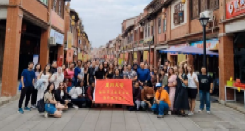
Students participating in this cultural experience activity visited two major cultural landmarks: Damei Ancient Village and Zhangzhou Ancient City. They immersively experienced the exquisite craftsmanship and charm of traditional Chinese architecture, observed the original features and the warm, lively atmosphere of daily life in an ancient Chinese city amidst modernization, and deepened their understanding and love for Chinese culture through this journey.
As a renowned Chinese historical and cultural village, Damei Ancient Village is famous for its "Nine-Palace Grid" layout and uniform Southern Fujian red-brick ancient houses. The houses are connected, and the lanes crisscross, preserving the architectural pattern from the Ming and Qing dynasties. Led by a guide, the international students strolled along the bluestone lanes, carefully observing the saddle-shaped gables, exquisite brick and wood carvings, and the unique "one entrance, three bays" structure of the ancient houses. They listened to explanations about the architectural wisdom of "red bricks, white stones, double-sloped roofs, and swallowtail ridges with bricks protruding into the stonework," appreciating the family culture and folk connotations embedded within the architecture.
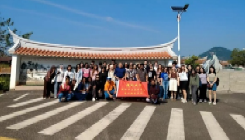
Zhangzhou Ancient City completely preserves its street layout dating back to the Tang and Song dynasties. The arcade-lined old streets, century-old shops, and modern cultural and creative stores complement each other, while the daily life scenes of ordinary residents fill the ancient city with a lively atmosphere. Students strolled under the arcades, admiring the unique design of the "arcade corridors" and experiencing their practical function of providing shade from the sun and shelter from the rain. At time-honored shops, they tasted Southern Fujian specialty snacks such as hand-made Mua Ji (glutinous rice cakes) and Mianxian Hu (thin noodles in broth). At historical sites like the ancient city wall ruins and the Confucian Temple, they listened to stories about Zhangzhou's thousand-year history of city establishment and cultural heritage.
Centered around on-site exploration, this cultural experience activity allowed students to step beyond the confines of textbooks and enter vibrant cultural scenes. Through multi-sensory methods such as touching traditional artifacts, tasting local flavors, and participating in interactive experiences, they intuitively grasped the diversity and vivid vitality of Chinese culture and gained a deeper understanding of its profound underlying heritage.