Quanzhou Cultural Experience Activity
Quanzhou Kaiyuan Temple
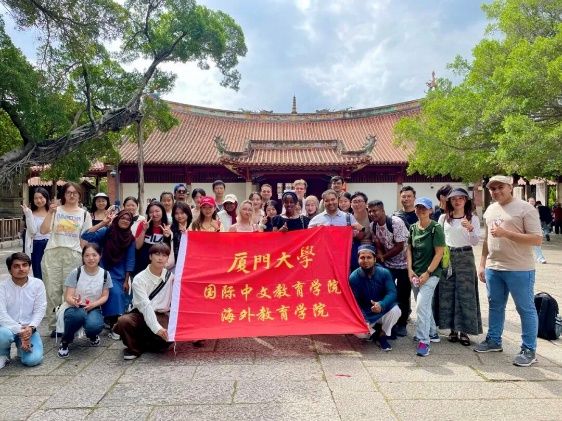
The first stop of the activity brought teachers and students to Quanzhou Kaiyuan Temple, a UNESCO World Cultural Heritage site. Quanzhou was a world-class maritime trade center in Song and Yuan China, and this thousand-year-old temple, originally built in the Tang Dynasty, stands as vivid testimony to the flourishing maritime trade and cultural exchange during the Song and Yuan periods. It was once an important gathering place for Chinese and foreign merchants, envoys, and travelers, with every remaining relic bearing the imprint of mutual learning among civilizations. The East and West Pagodas stand tall and majestic; the bas-reliefs on their pedestals not only depict traditional figures and stories but also ingeniously incorporate exotic elements such as Persian merchants and Arab motifs, vividly recreating the grand scene of "global trade" in those times. Teachers and students touched the stone carvings with foreign influences and listened to stories of the era when Zayton Port (Quanzhou) was crowded with merchant ships and a hub for Chinese and international interaction during the Song and Yuan dynasties, genuinely feeling the open attitude of ancient China towards foreign exchange.
Quanzhou West Street
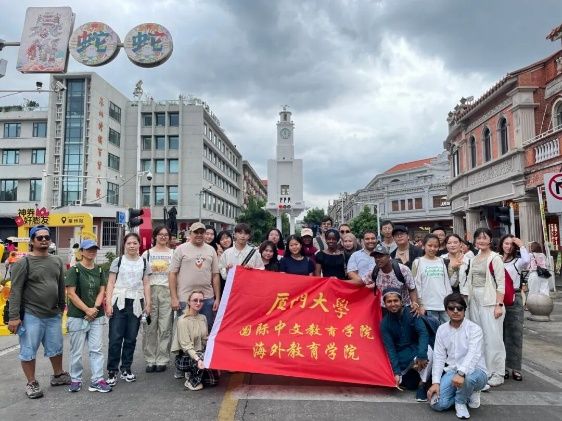
On Quanzhou West Street, the traditional appearance of a Southern Fujian street is intertwined with the atmosphere of ancient and modern life. As one of Quanzhou's oldest streets, it was once an extension of the commercial activities along the Maritime Silk Road, and traces of multicultural integration can still be found here today. The ancient Clock Tower stands quietly, its architectural style subtly embodying a fusion of Chinese and Western elements, telling the story of an era when different civilizations coexisted and thrived together in the ancient city of Zayton, known as the "World's Largest Port in the East."
Quanzhou Intangible Cultural Heritage Museum
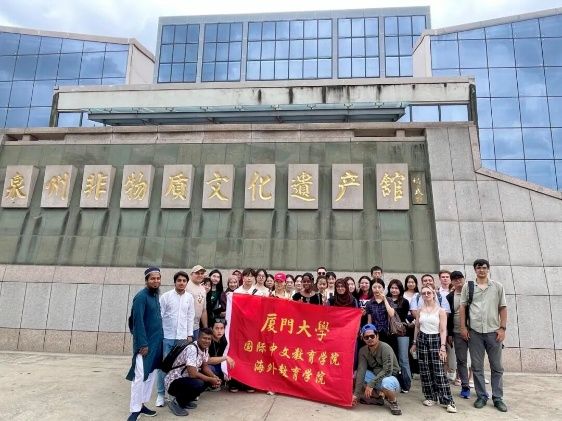
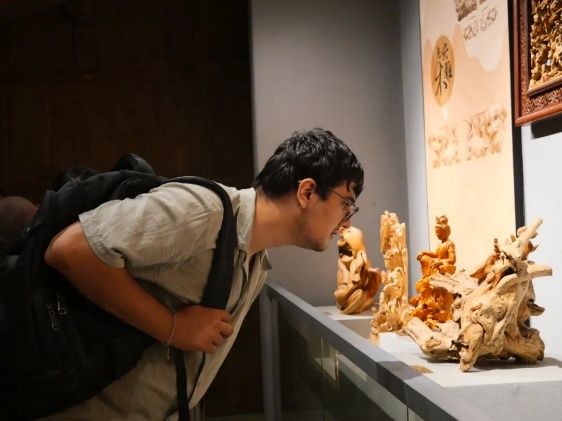
At the Quanzhou Intangible Cultural Heritage Museum, students experienced the unique charm of intangible cultural heritage up close through systematic visits and dynamic demonstrations by inheritors. From the misty elegance of Yongchun wicker-woven paintings to the jade-like warmth of Dehua white porcelain; from the long-lasting melodious charm of Nanyin music to the vivid and lifelike performances of puppet shows... These exquisite skills are not only treasures of Chinese culture but also inherently carry the potential historical context of foreign exchange and influence via the Maritime Silk Road. This in-depth experience allowed students to gain a deeper understanding of the diverse charm and inheritance value of Chinese culture.