Big World in a Small Living Room
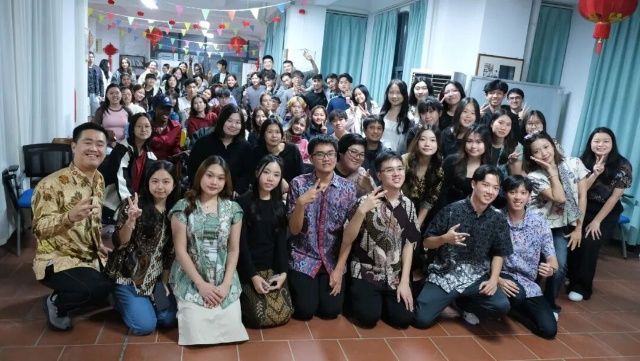
"Big World in a Small Living Room" is a characteristic one-stop student community activity created by the College of Chinese International Education of Xiamen University. Launched monthly, its core format involves student teams from different countries taking turns acting as the "hosts of the living room." The host team is fully responsible for planning cultural activities themed around their home country, showcasing cultural highlights such as local scenery, folk customs, and cuisine. Through these exchanges, the activity helps international students improve their Chinese language skills and forge international friendships. The participating "guests" can embark on a "world micro-journey" without leaving the community, immersing themselves in foreign cultures and learning Chinese while enhancing cross-cultural understanding in a relaxed, bilingual communication environment. Throughout the activity, Chinese student volunteers assist with communication, creating a friendly and pressure-free atmosphere. Each session focuses on one country, allowing the hosts to become the protagonists of the event.
Thailand
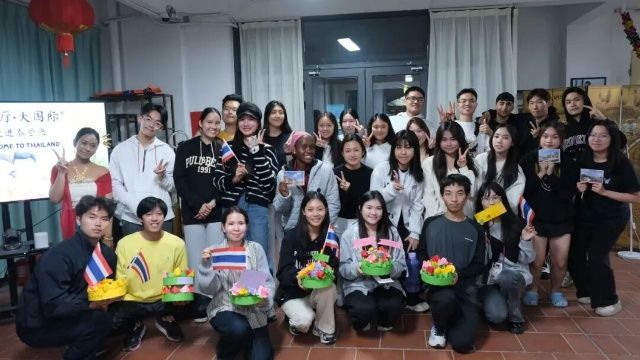
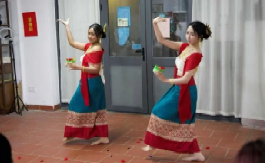
The first session of "Big World in a Small Living Room," the "Journey to Thailand" cross-cultural event, was planned and hosted by the Thai student team. The activity kicked off with a traditional Thai dance, followed by a comprehensive introduction to Thailand's natural and cultural landscapes through pictures and explanations. The core segment featured an explanation of the Loy Krathong Festival culture and a creative krathong-making session. The event concluded with interactive activities such as work sharing and a prize quiz, creating a lively atmosphere. This activity allowed Chinese and international students to gain an intuitive understanding of Thai culture and enhanced their cross-cultural communication and teamwork skills.
Indonesia
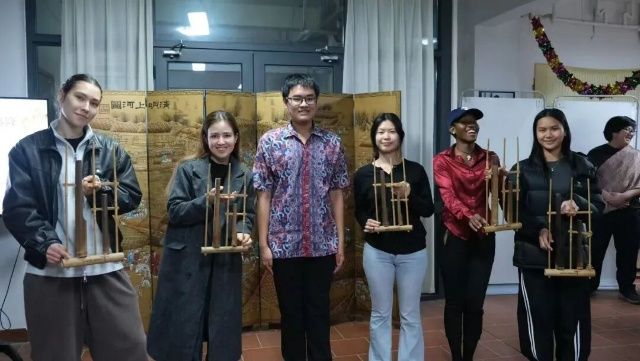
The second session of "Big World in a Small Living Room," focusing on Indonesian cultural experiences, was planned by Indonesian international students and attracted nearly 60 Chinese and international participants. The event began with a red carpet welcome and was warmed up by a traditional Indonesian dance. It also featured sessions on tasting characteristic snacks and an illustrated introduction to Indonesian customs and culture. The highlight was the demonstration and ensemble experience of the Angklung, Indonesia's national musical instrument. Students played the Mandarin classic "Friends" together, experiencing the cultural philosophy of collaboration. Subsequent activities included a cultural sharing Q&A session and a group activity of recording a finger dance video. The event concluded successfully with a group photo. This activity allowed participants to experience the diverse cultural charm of Indonesia and deepened their understanding of cross-cultural communication.